
How to Search for a Warrant in Dawson County
The official Sheriff's Office page lists a phone contact and a VINELink custody link, but no public warrant search. Call the sheriff for its process, then identify the court that issued the matter. The 106th District Court and District Clerk cover district-level files. The countywide JP handles traffic and fine-only matters, while Lamesa and O'Donnell have separate municipal courts.
Use the person's full legal name and date of birth to help the clerk identify a file, plus a citation or cause number when available. The research does not show which fields any local office requires or whether it will answer by phone. Ask before sending personal details. A result from one office may not cover another court, so an attorney can help interpret an uncertain record.
- Call the sheriff at 806-872-7560 and ask whether its office can check county process for you.
- Call the issuing court: District Clerk 806-329-3315, 106th Court 806-872-3740, or JP 806-329-3324.
- For a city matter, contact the municipal court named on the citation. The OCA directory lists Lamesa and O'Donnell.
- Review the county's TPIA request document if you need a written record; confirm submission steps first.
- Use OmniBase only for a participating court's renewal hold, not warrant status; contact the issuing court for a final answer.
No Dawson County Warrant Portal
No public Dawson County name-search warrant portal was located in the county source set. The county sheriff page publishes 806-872-7560 and links to a custody-status service, but it does not display a roster or dedicated warrant line. The right next step is a call to that office and then the court named on the case paper.
For a written response, the county links an Open Records Act / Texas Public Information Act PDF. The reviewed source does not show an online request form, named records officer, fee, or response-time promise. Ask which office keeps the record before submitting; the sheriff, court clerks, JP, and city courts do not share one public index.
The contact chain is official, but it is not an online name search.
Dawson County Warrant Search Fields
There is no verified Dawson warrant search form to walk field by field. The table records what county channels did not expose, and what a caller can ask about rather than what a portal accepts. Use a citation or cause number from the court paper when possible, and do not assume that a name-only search checks every lower court.
| Field Label | Type | Required | Notes |
|---|---|---|---|
| Last name | Not exposed | Unknown | Ask whether exact or partial spelling is used. |
| First name | Not exposed | Unknown | Have the full legal name ready for a clerk. |
| Date of birth | Not exposed | Unknown | May help distinguish records; do not send to an unverified vendor. |
| Citation or cause number | Not exposed | Unknown | Use the number on the citation or court paper. |
| Court or city | Not exposed | Unknown | Ask if the matter is district, JP, Lamesa, O'Donnell, or another court. |
Reading Dawson County Court Directory Filters
The Texas Office of Court Administration directory helps locate a court office. Its controls include search type, court type, county, court name, city, and sort options. That directory identifies where a court sits; it does not search a person's case or tell whether a warrant is active.
Use the county filter to locate Dawson offices, then follow the official contact page for the specific court. Do not treat a successful directory result as a record hit. The directory capture shows search controls rather than a private case. Open the court directory. 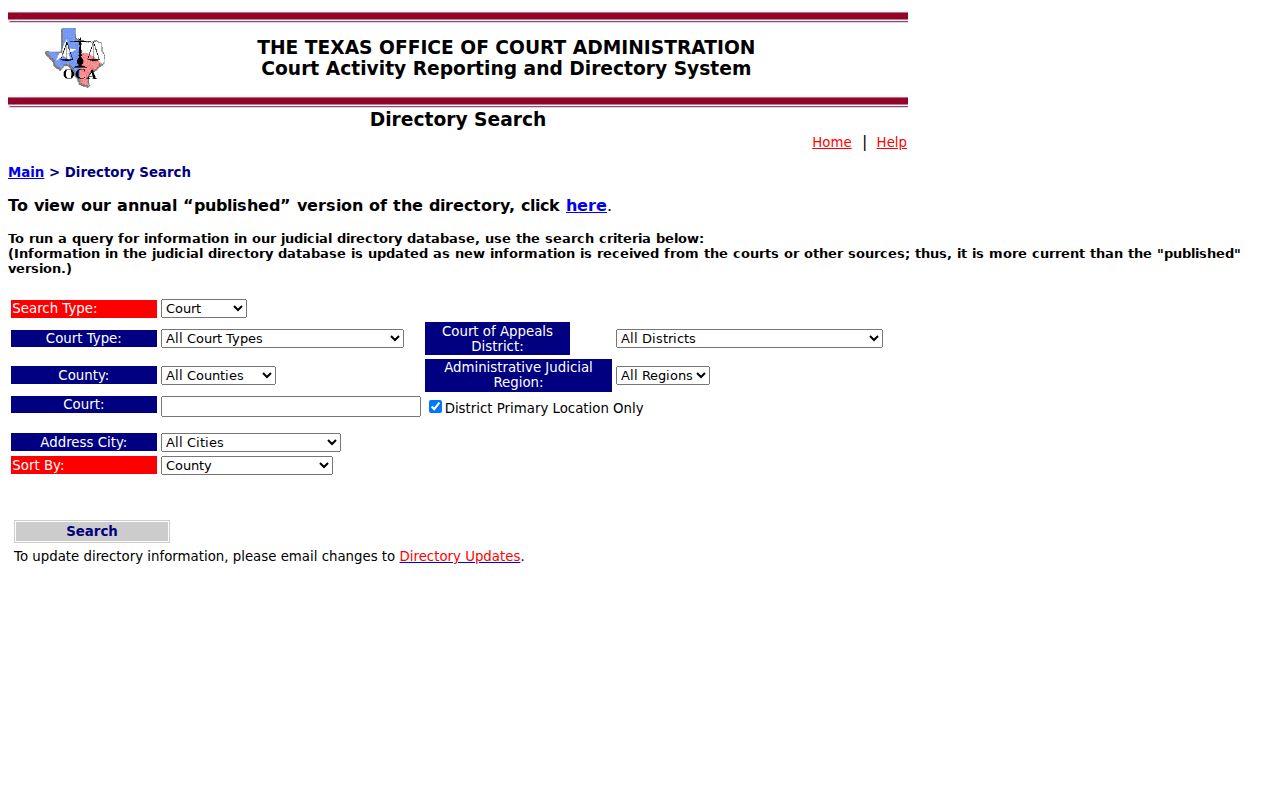 It is useful for office routing only.
If an office says another court keeps the case, use that court's own contact route rather than repeating a directory search.
What a Dawson County Warrant Search Returns
No public Dawson sample result was found. If a clerk or sheriff confirms a record, ask for the issuing court, process number, cause or citation number, type, current status, bond or reinstatement terms, and the agency assigned to serve it. The office may limit details under public-record rules. The fields below are questions to confirm, not a claim that a local portal displays them.
| Number | No sample published; request the court's identifier. |
|---|---|
| Type or reason | Arrest, failure to appear, capias, or other label; ask the issuing clerk. |
| Issuing court | 106th District Court, JP, or city court, depending on the case. |
| Bond or balance | No Dawson-wide bond schedule or amount was found. |
| Status | Ask whether active, served, recalled, quashed, or otherwise cleared. |
Why a Dawson County Warrant Result May Be Missing
A missing result does not establish that no warrant exists. A city citation may stay with that municipal court, a JP matter may be held at the countywide JP, and a district case may be with the District Clerk. A newly issued process may not yet be reflected in a separate law-enforcement record. The local sources do not publish a shared update schedule.
Search-warrant affidavits are a different record type from an arrest warrant. Under Code of Criminal Procedure Chapter 18, an affidavit generally becomes public after the warrant is executed, subject to exceptions. The statute capture shows the access rule, not a person-specific warrant.  Ask the court for the record that matches the question.
Confirm the source and the type before reading an empty screen as clearance.
Where Dawson County Warrants Are Checked
For district criminal and felony files, contact the 106th District Court and District Clerk. The District Clerk page lists the fourth-floor office, while the county clerk keeps a different record set. County Clerk information is useful when an office needs to redirect a county-level record question. 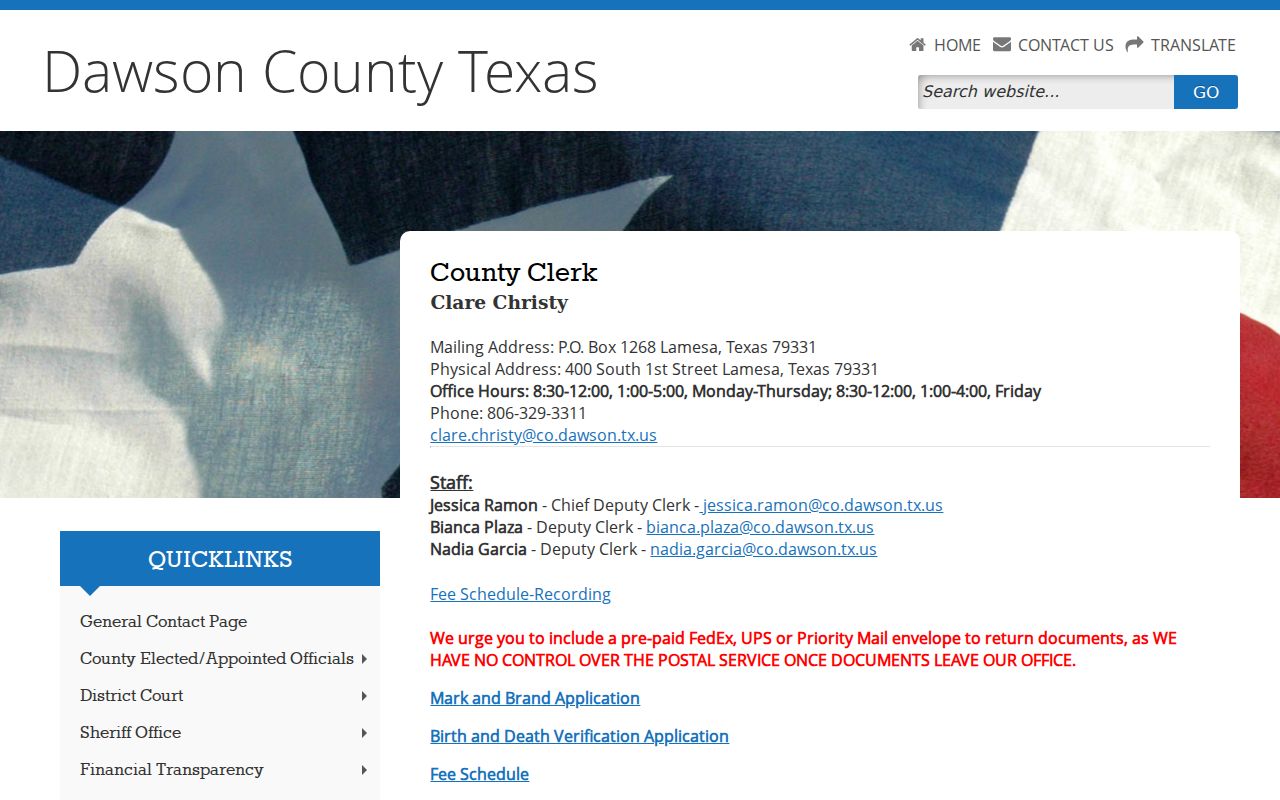 The two clerks should not be treated as one warrant database.
For traffic, fine-only, and Class C cases, use the Justice of the Peace or the municipal court named on the citation. The sheriff is the county law-enforcement contact, but a city court file may not appear in a county list. Ask the issuing office which agency has service responsibility and whether a written request belongs with another custodian.
OmniBase Is Not a Warrant Search
Texas does not provide one public statewide warrant search. OmniBase's FTAP/FTP program tracks violations reported by participating courts for renewal-hold purposes; its FAQ says it has no warrant information. The DPS FAQ also says license staff cannot check warrant status.
A hold may be present without a public warrant result, and a clear renewal record does not answer the court question. Contact the court that reported the violation for payment or hold details. Contact the issuing court or sheriff for warrant status. Do not send payment to DPS or OmniBase for a court case.
One state program covers only participating violations, not every court or every warrant.
Dawson County Written Requests Need the Right Custodian
The county publishes an Open Records Act / Texas Public Information Act document, but the reviewed materials do not identify a warrant-specific request form, fee, records officer, online submission portal, or delivery timetable. A written request begins with identifying the office that actually keeps the record. The District Clerk, County Clerk, Justice of the Peace, city court, and Sheriff's Office have separate responsibilities.
Describe an existing record as narrowly as possible: give the court or agency, case or citation number, date, and record type. Ask the office how it accepts requests and whether a copy is available. A public-information request can seek an existing releasable record; it does not create a shared warrant index or require a clerk to make a legal-status determination. Confidential, sealed, and juvenile material may be withheld or redacted. For a time-sensitive status question, call the issuing court rather than waiting for a records response.
Access and Restricted Warrants
The Texas Public Information Act sets a public-record route, but access depends on the record and any confidentiality rule. A sealed case, a juvenile law-enforcement file, or a search-warrant affidavit that has not reached the public-access point may not be released. The county's official TPIA PDF is the local starting document; no Dawson warrant-specific form or fee schedule was found.
Key Rules:
Texas Government Code Chapter 552 makes public information available subject to lawful exceptions.
Family Code Chapter 58 limits public access to many juvenile law-enforcement records.
Code of Criminal Procedure Chapter 18 governs search warrants and affidavit access after execution, subject to exceptions.
The juvenile statute page is the source for this restriction. Review Texas Family Code Chapter 58. It explains why some files will not be returned as ordinary public records.