
Arrest Warrants in Dawson County
An arrest warrant tells an officer to take someone into custody. It targets an identified offense. Under Texas Code of Criminal Procedure Chapter 15, a magistrate may issue a warrant or a summons when the law allows it or a sworn accusation supports it. The complaint or affidavit supplies the facts. The magistrate then decides whether the legal threshold is met. In Dawson County, who signs depends on the charge and the court. A felony file points to the 106th District Court and the District Clerk. Lower-level matters belong to a justice or municipal court. The county publishes no single warrant portal and no standard local workflow.
Dawson County Arrest Warrant Issuance
Chapter 15 spells out the sworn complaint, the magistrate's authority, and the form an arrest warrant must take. Not every local case opens with the same office. An officer or a prosecutor can present the complaint. The authorized magistrate reviews the facts from there. Dawson County publishes no warrant application form of its own and no list of which magistrate takes which charge.
The official Chapter 15 text is the statewide procedure. Its capture shows the statute, not an individual warrant. Review Chapter 15.  Ask the court for the local issuer and case route.
A magistrate's decision and an agency's service assignment are separate steps.
What a Dawson County Arrest Warrant Contains
Dawson County posts no sample warrant, no number format, and no field inventory. Call the clerk instead. Confirm the process identifier, the court, the offense, the issue date, any bond terms, and the current status. These fields form a request checklist only. Every item may not appear.
| Warrant number | No public sample; request the court's case identifier. |
|---|---|
| Named person | Ask how the office distinguishes names; no local search fields are published. |
| Offense | Charge or allegation listed in the process, subject to access rules. |
| Issuing court | Ask for the judge or magistrate and court name. |
| Bond | No Dawson County bond schedule or counter instructions were found. |
| Issue and status dates | Confirm whether the warrant remains active, was served, or was recalled. |
Dawson County Arrest Warrant Fields
A clerk can often identify a case even with no public search page. Have the legal name ready. Add the date of birth and cause number too. The county's published material does not force a caller to give every field. Ask what the office needs first. Do not borrow a number pattern from another county. Dawson County has released no sample record, bond display, or status code. If the office can release a copy, ask whether it is current. Ask about any later recall or court order too.
How Dawson County Arrest Warrants Are Served
The Dawson County Sheriff's Office is the county law-enforcement contact. It maps no warrant to a named officer. Constable Tommy Flores is listed separately. Texas constables generally serve court process. Lamesa's code gives city police the duty for municipal-court writs. O'Donnell's court page names no serving agency. So ask the issuing court which agency holds the warrant and where to go before appearing. Dawson County posts no walk-in surrender spot, 24-hour warrant line, or bond counter. After arrest, Article 15.17 governs magistration, calling for presentation without unnecessary delay and no later than 48 hours, subject to its procedures.
Dawson County Arrest Warrant Service Roles
Who serves the paper turns on who issued it. The Dawson County Sheriff's Office lists 806-872-7560. The county constable page gives office and cell contacts but names no warrant division. Lamesa's code puts municipal-court writs and processes on its police chief or deputy.
| Office | Documented role | What remains to confirm |
|---|---|---|
| Sheriff | County law-enforcement contact | Specific warrant assignment |
| Constable | County court-process contact | Which process this office serves |
| Lamesa Police | Executes city-court process under city code | Current case status and service route |
| Other agency | May hold its own process | Originating court and jurisdiction |
In Dawson County, follow the case paperwork and the court's direction rather than assuming one office handles every warrant.
Arrest Warrant vs Summons vs Bench Warrant
The name on a court paper signals its procedure. A summons tells a person to appear. An arrest warrant allows custody for an offense. A bench warrant answers a missed obligation in an existing case, and the Dawson County bench warrant page walks through the failure-to-appear route.
| Feature | Arrest Warrant | Summons | Bench Warrant |
|---|---|---|---|
| What it orders | Arrest for an identified offense | Appearance at a stated time | Custody after a missed obligation |
| Basis | Probable-cause process | Authorized notice procedure | Failure to appear or comply |
| Issuer | Authorized magistrate | Court or authorized officer | Judge handling the case |
| Response | Confirm with court and counsel | Appear as directed | Ask issuing judge about reset or recall |
Federal Warrants Route Through Lubbock
A federal warrant does not run through Dawson County's sheriff page, JP payment route, or municipal courts. Dawson County sits in the Northern District of Texas, Lubbock Division. PACER may show public federal docket entries. Some warrants stay sealed or off the docket.
The official PACER fee and access page describes federal docket limits, not warrant confirmation. Review the fee information. 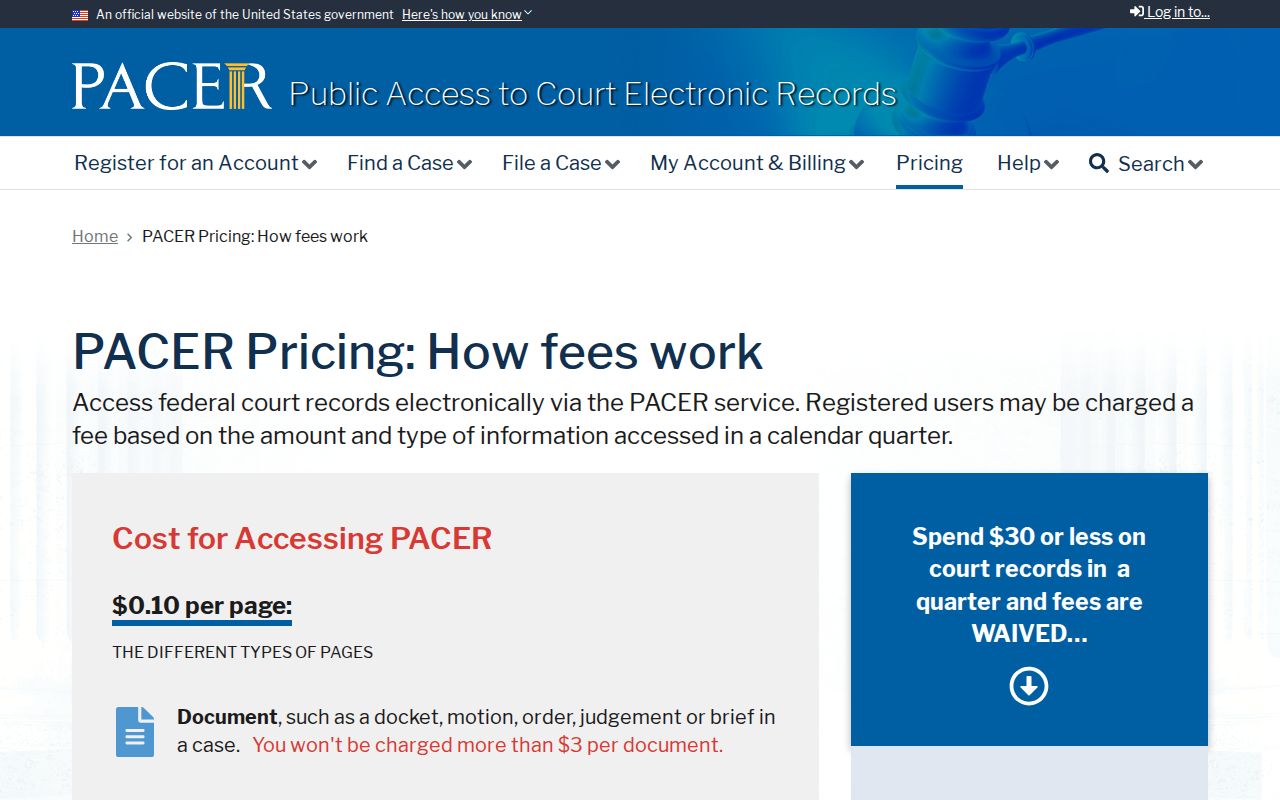 Use counsel or the federal court and U.S. Marshals through their official channels for a possible federal matter.
The federal court, not any Dawson County tribunal, controls its own process and release terms.
Dawson County Arrest Warrant Bond Questions
Dawson County posts no standard bond amount, surety list, personal-recognizance form, or bond-window hours. Ask the issuing court what type and amount apply. Arrange payment only after that. Cash, surety, personal bond, and a no-bond hold each carry different terms. No Dawson County figure can be inferred from one case. Posting bond may secure release or a future appearance, but it does not dismiss the underlying charge. Keep the receipt. Ask for the next court date, confirm whether a separate recall or setting order is needed, and rely on the court rather than a third-party listing.
A Dawson Search-Warrant Affidavit Is a Different Record
A search warrant and an arrest warrant answer different legal questions in Dawson County. A search warrant authorizes officers to search a place under its own rules. Texas Code of Criminal Procedure Chapter 18 governs search-warrant affidavits. That statute generally makes an affidavit public once it has been executed, though exceptions apply. Ask too early, or for a protected matter, and you may not get a copy. The county publishes no sample arrest warrant, no number format, and no public list that joins search and arrest process together. So match your question to the right office. For an arrest warrant, ask the court or magistrate that issued the process, and identify the underlying case number. For a search of a location, ask the appropriate clerk in Dawson County whether an executed affidavit is available and what record identifiers the request needs. Even when one investigation produced both records, they still prove different things. Nothing here spells out a Dawson-specific affidavit request route or a public timing estimate. And a public affidavit, on its own, is not a way to check current custody or arrest status.
What to Do If There Is a Warrant for You
Confirm the issuing court and the warrant's current status before you travel anywhere. For a district case, call the District Clerk or the court coordinator. If the matter began with a citation, contact the JP or the city court instead. Ask whether voluntary appearance, bond, or a motion to recall or quash is on the table, and whether counsel can arrange the next step for you. Dawson County publishes no walk-in protocol.
Important: Speak with a Texas attorney before appearing, and ask the issuing court where to go and whether bond or surrender is required.
Texas Article 15.17 applies after an arrest. It requires prompt presentation before a magistrate, with a no-later-than-48-hour rule under the statute's procedures. The magistrate handles warnings and sets release terms when allowed. Once the court acts, request written confirmation of the status and ask how the sheriff receives the update. For the county contact chain, see the Dawson County warrant records overview.